
GOOGLE REVIEWS FOR LANDSCAPING COMPANIES
Google Reviews for Landscaping Companies
The Short Answer
Landscaping reviews land best right after the big reveal, not in the middle of a job. The strongest programs ask immediately after a finished install or hardscape unveiling, or at the close of a mowing-season contract, pair the request with a before/after photo, and keep a steady trickle of reviews flowing year-round instead of leaning on one seasonal burst.
If you already run a landscaping company, you don’t need convincing that the work sells itself once a client actually sees it finished. What most companies haven’t systemized is turning that moment into five-star reviews on a predictable schedule. This guide builds on our full guide to getting more Google reviews and our advice on how to respond to reviews, but focuses on what makes landscaping different: the visual, before-and-after nature of the work, the sharp swing between spring and fall rushes and winter lulls, and a customer base split between one-time install clients and year-round maintenance accounts. For the rest of your profile, see our guides to local SEO for landscaping companies, Google Business Profile categories for landscaping companies, and local citations for landscaping companies.
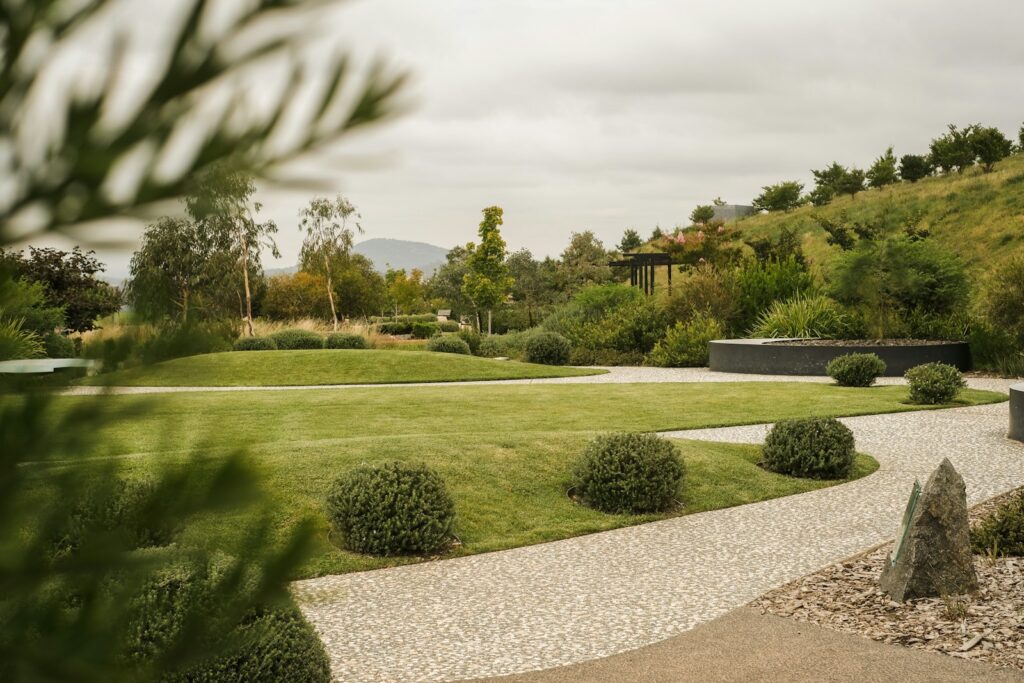
Why Reviews Matter More for Landscaping Companies
A full landscape renovation, hardscape build, or new sod install is a big-ticket, considered purchase. Most homeowners collect three or four quotes before hiring, and the spread between the cheapest and priciest bid can be significant, so reviews are doing real work convincing a prospect that the number they’re about to sign off on is worth it.
BrightLocal’s 2026 Local Consumer Review Survey found that 97% of consumers read reviews for local businesses, and a large share won’t consider a company rated under four stars. For landscaping specifically, buyers also study the photos attached to reviews almost as closely as the star rating, since the work is something they can evaluate with their own eyes before ever picking up the phone. Google’s own guidance on managing reviews makes clear that responding and engaging consistently is part of what keeps a profile healthy.
Reviews are also a ranking input for the Google Map Pack, alongside citations and on-page signals, so a steady flow of them is doing double duty: building trust with the homeowner comparing quotes and helping your profile surface in the first place when they search “landscaper near me.”
The Best Moment to Ask: After the Reveal, Not Mid-Project
Timing matters more in landscaping than almost any other trade, because the emotional payoff isn’t the day the crew shows up, it’s the day the yard finally looks the way the client pictured it. Asking mid-project, while sod is still settling or a paver base is exposed, catches someone before they’ve had a chance to fall in love with the result.
Wait for the reveal: the final walkthrough, the moment a client steps back and actually sees the finished lawn, patio, or planting bed for the first time. For maintenance and mowing accounts, the equivalent moment is the end of the season or a contract renewal, when the client is looking back at a full year of a tidy yard rather than a single visit.
- Final walkthrough is done and the client has seen the finished result in person
- Beds are cleaned, debris is hauled, and any new turf or seams have had a chance to settle
- For maintenance accounts, the current invoice or season’s contract is paid in full
- The request feels tied to the result they’re standing in, not to collecting a payment
Pair the Ask With a Before/After Photo
Landscaping is one of the most visual services a homeowner ever buys, which makes it a natural fit for photo-paired review requests. A crew that already has before shots on a phone from the initial walkthrough or estimate can text a quick before/after the same day the job wraps, and that image does more convincing on its own than most written descriptions.
Texting a photo alongside the ask also does something a words-only request can’t: it reminds the client exactly what changed, which makes writing the review itself much easier. They can describe what they’re looking at instead of trying to summarize the whole project from memory a week later.
Seasonal Rushes vs. Winter Lulls: Why a Steady Drip Beats a Burst
Landscaping review volume tends to follow the calendar almost exactly. Spring brings a rush of new installs, cleanups, and mulch jobs, fall brings another wave around leaf cleanup and last-chance planting, and then winter goes quiet for anyone not running snow removal. If review requests only happen during those two busy windows, a company’s profile can end up with a pile of reviews from April and October and almost nothing from December through February.
That pattern looks worse to both homeowners and Google than it sounds. A prospect researching a company in January sees a review list that goes stale for months, which reads as inactive even if the business is running fine behind the scenes, and Google’s algorithm treats review recency as a freshness signal, so long gaps can quietly cost you visibility right when the next spring rush is about to start. A steady drip of a few reviews a month, sourced from maintenance visits, snow or ice work, and off-season consultations, keeps the profile looking active year-round and spreads the workload instead of triggering a suspicious-looking spike every spring.
Recurring Maintenance Customers vs. One-Time Install Customers
The ask has to change depending on who you’re asking. A one-time install customer gets an obvious peak moment, the reveal, and one clear request tied to that single project. A recurring mowing or maintenance customer doesn’t get that same emotional spike every week, so asking after every visit feels forced and can come across as pushy.
Instead, tie the ask to a natural checkpoint: the end of the mowing season, a contract renewal, or a seasonal changeover like the spring cleanup that kicks off the year. Frame it around the relationship rather than any single mow, since that’s what the customer actually values and what they’ll actually write about.
Handling Reviews That Mention Price
Landscaping quotes vary widely by scope, materials, and market, so price shows up constantly in reviews, both as praise (“expensive but worth every penny”) and as a complaint. Either way, the response matters, because the next prospect reading it is usually comparing your number against two or three other bids right now.
When a review is positive but mentions cost, thank the reviewer specifically for calling out the value, not just the compliment, that reinforces to future readers that the price bought something real. When a review is negative about price, resist getting defensive: acknowledge the number is real money, restate briefly what it covered, and invite a direct conversation rather than arguing in public. Our guide to review response examples covers the wording for trickier situations like this one.
Example response: “Thanks for the kind words, [Name]. We know a full backyard renovation is a real investment, and we’re glad it’s clear the grading, drainage work, and plant selection are holding up. Appreciate you taking the time to write this.”
Request Templates by Job Type
The right wording changes depending on the type of job. Here’s how the ask differs across three common landscaping scenarios.
Completed Backyard Install
Hi [Name], the new patio and planting beds are finished and cleaned up, [attach photo]. If you’re happy with how it turned out, a quick Google review would mean a lot: [link].
End-of-Season Maintenance
Thanks for another great season, [Name]! We hope the lawn looked its best all year. If you have a minute, a short Google review helps other homeowners in the neighborhood find us before spring books up: [link].
Recurring Mowing Customer
Hi [Name], it’s been great keeping your lawn looking sharp this year. If you’ve noticed the difference, a quick Google review helps us a lot, and takes less time than one mow: [link].
QUESTIONS
Frequently Asked Questions
When should a landscaping company ask for a Google review?
Right after the client sees the finished result, either the final walkthrough on an install or hardscape job, or a natural checkpoint like a season's end or contract renewal for maintenance accounts. Avoid asking mid-project, before the reveal.
Should before/after photos go with every review request?
Whenever possible. Landscaping is highly visual, and a photo reminds the customer exactly what changed, which makes the review itself easier to write and more specific.
How do we handle a review that says our pricing is high?
Acknowledge the number honestly, remind them what it covered, and invite a direct conversation instead of getting defensive publicly. If the review is positive despite mentioning price, thank them specifically for calling out the value.
Why do our reviews dry up in the winter?
Review volume naturally follows the installation season unless you build in requests from maintenance customers, off-season consultations, or snow and ice work. A steady drip year-round looks better to both customers and Google than a spring and fall burst with nothing in between.
Should we ask maintenance customers for a review after every visit?
No. Asking after every mow feels forced. Tie the request to a natural checkpoint instead, like the end of the season or a contract renewal, so it reflects the relationship rather than a single visit.
Want a Review System Built for Your Landscape Business?
Want a review-generation system built for your landscaping business, timed to your install reveals and season-end renewals? See our Review Management Services.
Local SEO for Denver service businesses. We help HVAC, tree service, and home-service companies rank in the Map Pack and turn searches into booked jobs.
★★★★★
Trusted by Denver service businesses
Services
Company
© 2026 ReAlign Marketing. All rights reserved.