
GOOGLE REVIEWS
How to Get More Google Reviews (Without Breaking the Rules)
The Short Answer
The businesses that consistently rack up Google reviews aren’t doing anything clever. They have a direct link straight to their review box, and they ask for it the same way every time, right after a customer has a good experience. No gimmicks, no incentives, just a low-friction ask at the right moment, repeated consistently.
Getting more Google reviews comes down to removing friction and picking the right moment to ask, then doing it consistently enough that it becomes part of how you run the business. This guide covers the practical mechanics: building your review link, turning it into a QR code, email and text templates that actually get used, and the rules Google will penalize you for breaking. It is part of our complete guide to Google reviews, which also covers why reviews matter for local rankings and how to handle the ones that come in. Electricians face their own review-generation nuances — see our guide to Google reviews for electricians.
Get Your Google Review Link
Every request starts with the same thing: a direct link that drops a customer straight into the review box, not your general profile page. The fastest way to get it is through Google Maps. Search for your business, tap “Ask for reviews,” and Google generates a shareable link automatically. If you manage your profile through the Google Business Profile dashboard, you will find the same link under the “Get more reviews” or “Share review form” option. For the fastest way to grab it and where to use it, see our dedicated guide on your Google review link.
If neither option is available for your listing, you can also build the link manually using your Place ID: search “find my place ID” in Google's developer console, paste in your Place ID, and it generates a working review URL in the same format Google uses for the automated link. Either method lands the customer on the exact same screen, so use whichever is easiest to find.
Copy that link and treat it like a business asset, save it somewhere your whole team can find it, a pinned note, a CRM field, a shared doc. If the URL looks long and unwieldy, run it through a shortener like Bitly so it is easier to read out loud, text, or print on paper without wrapping onto three lines.
Turn the Link Into a QR Code
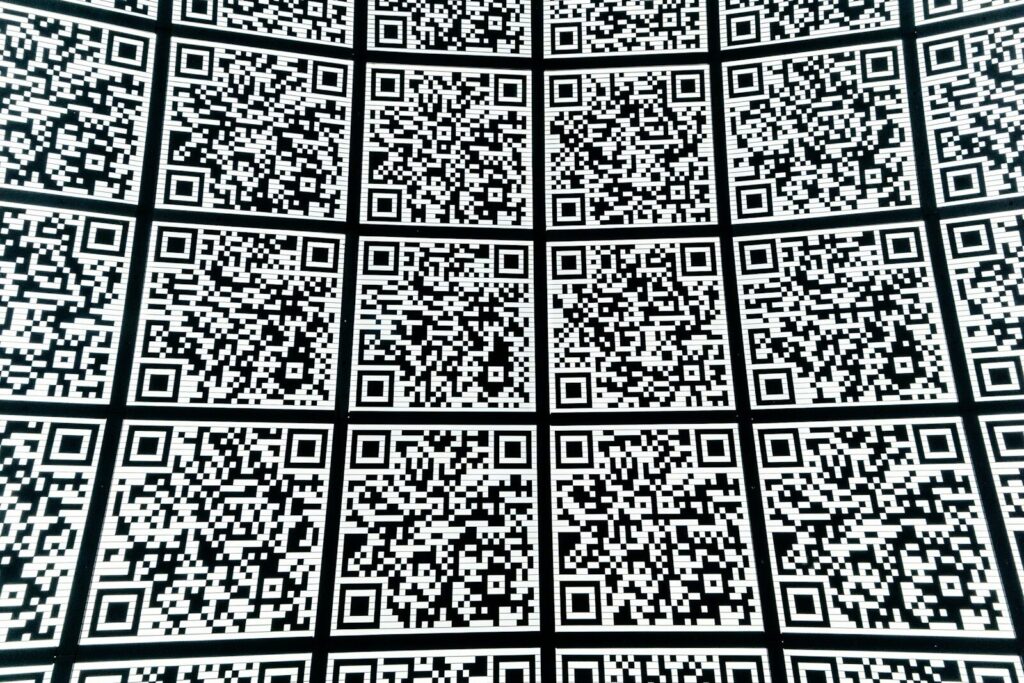
Once you have the link, generate a QR code from it. Google's own review link tool, Canva, and most link shorteners all offer a free QR generator. A code takes the request out of a conversation and puts it somewhere a customer can act on later, without you having to remember to text them.
For businesses with a physical location or a truck on the road, that means printed on receipts, on a small counter placard by the register, laminated on a clipboard techs carry, or as a vehicle decal on service vans so the ask is visible the moment a job wraps up.
A couple of practical notes: keep the code at least an inch square so phone cameras can scan it without trouble, and pair it with a short line of text like “Enjoyed your visit? Scan to leave us a review” so people understand what they are pointing their camera at before they scan.
Ask by Email
An email is worth sending within a day or two of a completed job or purchase, while the experience is still fresh. Keep it short, plainly worded, and put the link where it cannot be missed:
Subject: Thanks for choosing [Business Name]!
Hi [Name],
Thanks again for trusting us with [the job/service]. If you have 60 seconds, a quick Google review would genuinely help, it is one of the biggest ways new customers decide who to call: [review link]
Thanks again,
[Your name], [Business Name]
Hi [Name],
Thanks again for trusting us with [the job/service]. If you have 60 seconds, a quick Google review would genuinely help, it is one of the biggest ways new customers decide who to call: [review link]
Thanks again,
[Your name], [Business Name]
Ask by Text/SMS
For service businesses in particular, a text sent right after the technician leaves tends to outperform email response rates. Keep it conversational:
Hi [Name], this is [Tech Name] with [Business Name]. Glad we could take care of [the job] today! If you have a minute, we would really appreciate a quick Google review: [review link] Thanks so much!
Send it the same day, ideally within an hour or two of the job finishing, while the customer still remembers exactly what went well.
Add It to Invoices and Email Footers
Beyond the direct ask, put the link, or its QR code, somewhere it sits passively in front of customers without needing a fresh message: the footer of every invoice, the signature block on staff emails, and any automated receipt or confirmation email your system already sends. None of this replaces asking directly, but it catches customers who meant to leave a review and forgot.
If you use invoicing or CRM software like QuickBooks, Jobber, or Housecall Pro, most of these let you add a custom line or button to the emailed invoice template, so the review link goes out automatically every time a job closes without anyone having to remember to add it by hand.
Timing Matters
The single biggest lever in review generation is not the wording of the ask, it is when you ask. Request a review the moment a customer signals they are happy: right after a job is completed and they say thanks, right after a five-star verbal comment, right after a purchase goes smoothly. Waiting a week or two lets the moment fade, and the request starts competing with everything else in their inbox. If you only fix one thing, fix the timing. Tree service companies in particular should see our guide on getting more Google reviews for tree service companies. Landscaping companies should see our guide to getting more Google reviews for landscaping companies. HVAC companies should see our guide to getting more Google reviews for HVAC companies. Plumbers should see our guide to getting more Google reviews for plumbers.
For service businesses, that usually means the tech asks in person or sends the text from the driveway before pulling away. For retail or restaurants, it means the request goes out the same day, tied to the receipt or a thank-you email, not a week later as part of a generic newsletter. The closer the ask sits to the good experience, the higher the response rate.
What's Against Google's Rules
Google is explicit about what crosses the line, and getting caught can mean removed reviews or a suspended profile. Steer clear of:
- Review gating, asking only customers you think will leave a positive review, or filtering unhappy customers away before they reach Google
- Offering incentives, discounts, or freebies in exchange for a review, positive or otherwise
- Buying reviews from a third-party service or marketplace
- Review swapping, agreeing with another business owner to leave reviews for each other
What to Do When Customers Don't Respond
Most customers who intend to leave a review simply forget, not because they did not have a good experience. One polite follow-up message a week or so after the first ask is reasonable and often does the trick. After that, let it go. Repeated reminders read as pushy, annoy otherwise happy customers, and risk a review that mentions being nagged rather than the actual experience. Once the reviews do start coming in, here is how to respond to them the right way so the momentum does not stall.
Questions
Frequently Asked Questions
Can I offer a discount for a review?
No. Google’s guidelines prohibit offering any incentive, discount, or free product in exchange for a review, even if you don’t specify it has to be positive. Profiles caught doing this risk having reviews removed or the listing suspended.
How many reviews should I aim for per month?
There is no official target, but a steady trickle beats a big batch. Aim for a consistent number relative to how many customers you serve, businesses that add a handful of new reviews every month tend to outperform ones that get a burst of 20 reviews once a year and then go quiet.
Can employees ask for reviews?
Yes, and front-line staff are often your best askers because they are the ones the customer just interacted with. Just make sure everyone uses the same direct review link and the same non-incentivized approach.
Is it okay to ask in person?
Yes. Asking verbally right after a good interaction is completely fine, follow it with a text or QR code so the customer can act on it immediately rather than trying to remember later.
What if a happy customer forgets to leave one?
Send one follow-up reminder about a week later. If they still do not respond, move on. The goal is a light, consistent system, not chasing down every single customer.
Want a Review System That Runs Itself?
A free Local SEO Audit includes a look at how to build sustainable review generation into your workflow, no cost, no obligation.
Local SEO for Denver service businesses. We help HVAC, tree service, and home-service companies rank in the Map Pack and turn searches into booked jobs.
★★★★★
Trusted by Denver service businesses
Services
Company
© 2026 ReAlign Marketing. All rights reserved.